

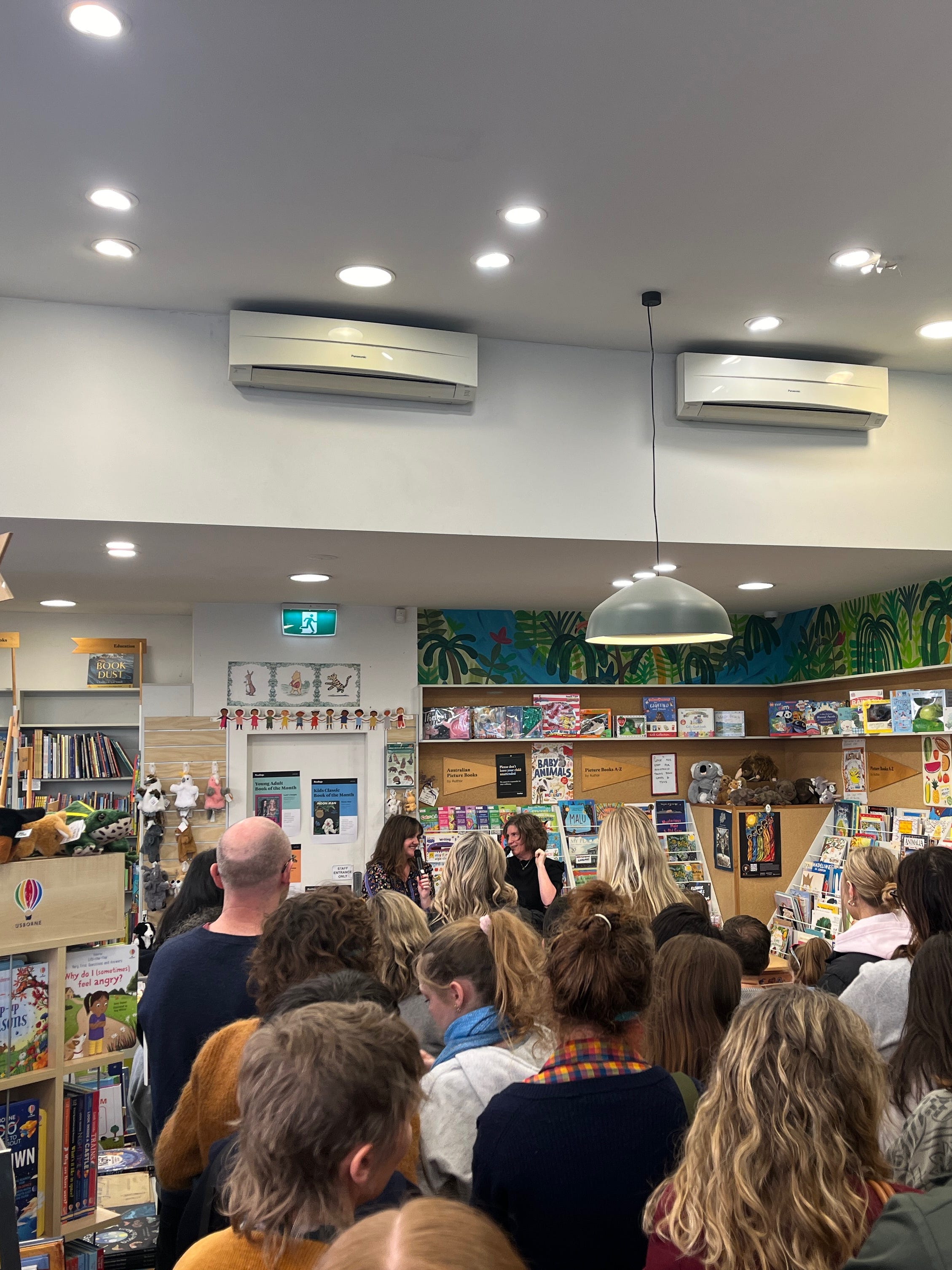
On the drive home from a book launch, my partner turned to me and said, ‘Amy and Nova asked each other why they write. I don’t think I’ve ever asked you that question. So: why do you write?’
I said, ‘I write because I can’t do anything else.’
He immediately interrupted with a list of my other skills and abilities. I replied, ‘That’s not what I meant. Let me explain.’
And then I told him this story.
When I was in Year 9, my high school drama teacher was in a major television commercial. We all thought it was the coolest thing in the world. We turned up to class with a million questions about how he’d booked the job and what it was like to be a real actor.
So he sat us down and answered all our questions.
The main lesson he taught us was as follows: you should only ever become an actor if you can’t do anything else. This means two things. Firstly, if you have literally no other talents or skills. Secondly, if you can’t be happy doing anything else. It does not matter if you are the best actor in this class. If you are even semi-decent at any other school subject and can be happy pursuing a career related to that, do that. A successful acting career will require an incredible amount of luck. It will have very little to do with your talent.
That conversation has stayed with me ever since. I’ve thought about it a lot, and I think it’s because he took us seriously and spoke to us like adults. He didn’t tell us that we wouldn’t understand the grown up world. He didn’t tell us we weren’t good enough. He told us the truth: he made three times as much money teaching us drama than the highest paid actor at his previous agency.
I think his advice is very transferable to writing.
In the final year of my undergraduate studies, I got offered a full-time job to become a lawyer. I enjoyed my work as a paralegal and I wanted to become a lawyer. So I took it.
During that first year of full-time work, I had to firmly put writing on the back burner for the first time in my life. On top of my legal day job, I then had to spend my evenings studying a graduate diploma to qualify as a lawyer. I had no time left to write. I missed it desperately.
The experience confirmed to me what I had already suspected about myself: while I didn’t fall in the first category described by my drama teacher, I did fall into the second one. I couldn’t be happy without writing.
So that is what I mean by, ‘I write because I can’t do anything else.’
I can’t be happy. I can’t feel fulfilled. I don’t feel like myself. As miserable as writing makes me sometimes, I am way more miserable without it.
So there is the answer: I write because it makes me happy. It makes me feel fulfilled. It makes me feel like myself.
I liked the answer I gave my partner so much I repeated it at my PhD interview a few months later. It remains true.