

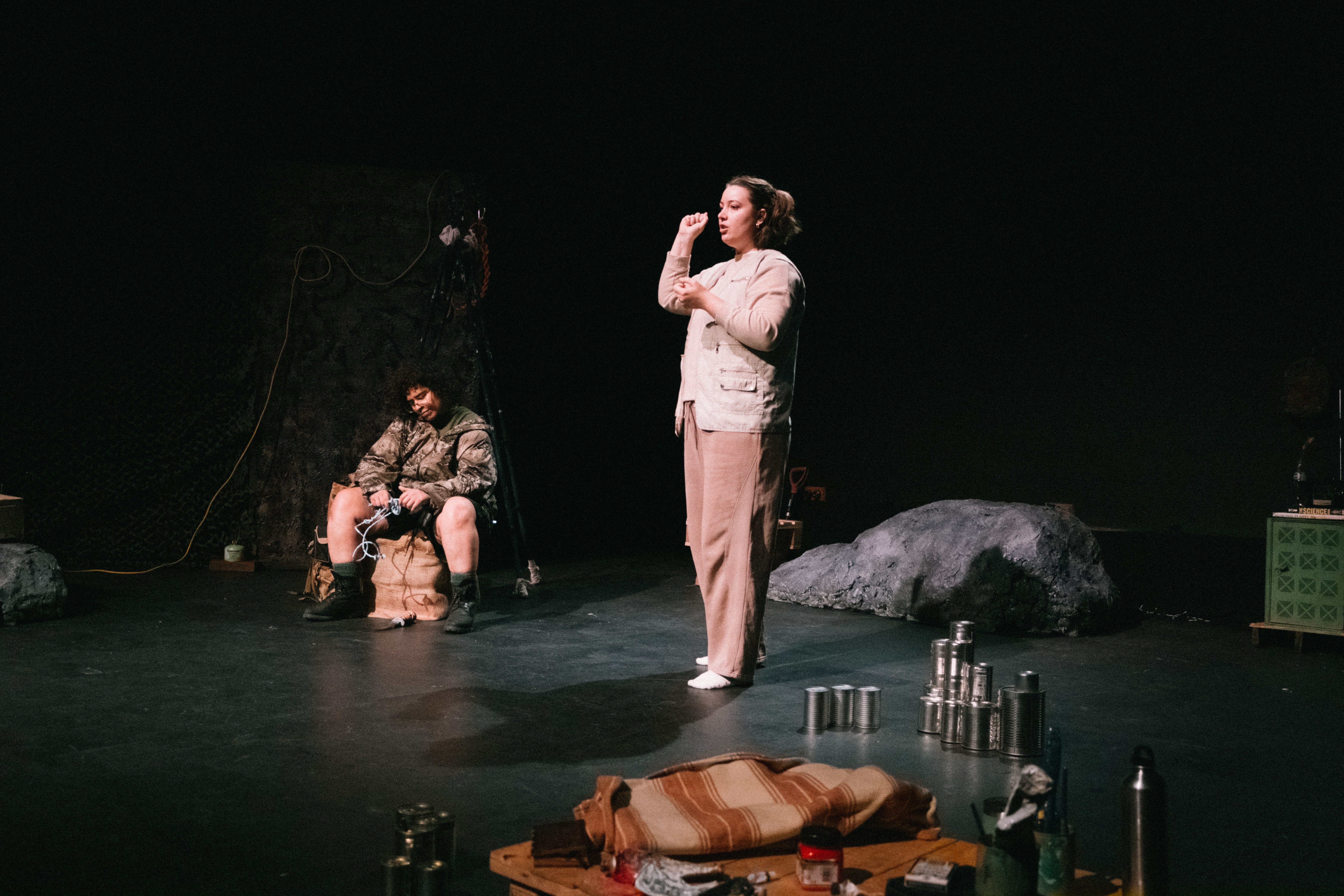
How to Eat Rabbit follows two friends hiding out in a doomsday bunker at the end of the world. Their diet consists mostly of tinned food and the activities that make up their days easily blur together.
The show has a strong concept and explores plenty of interesting ideas. How do you settle a roommate dispute at the end of the world? Should you eat a rabbit if you are vegetarian but you are starving? Will disabled people be abandoned and left to die?
It’s a good fit as part of the line up for the La Mama Hope Punk Climate Festival, dedicated to exploring the national climate conversation through art. It’s not possible to think about climate change without thinking about the apocalypse and therefore your odds at survival. How to Eat Rabbit ponders these questions and asks who gets to survive.
Alex and Cam are determined to survive side-by-side in their spruced-up rabbit burrow. Despite a foundation of friendship, there are plenty of opportunities for their personalities to clash. Alex is the go-getter who leaves the burrow to find supplies, looks after home improvements and wields the knife. Cam, on the other hand, is much softer and thinks they ought to hang fairy lights and get a roommate. Shouldn’t they try to save someone else if they can?
However, the interesting parts of life are found in the details, and How to Eat Rabbit is really lacking in the details. We don’t know the foundations of Cam and Alex’s friendship or how long they’ve known each other. We don’t know their hopes and dreams. We don’t know how or why the world has ended, or even if it has finished ending yet.
Sure, maybe none of those things have any bearing on the story. The shape of the narrative would remain the same. But a bigger investment in the details would allow the audience to become more connected in Cam and Alex’s fate as it hangs perilously in the balance.
The show is clearly invested in the exploration of what it means to be disabled. Its engagement with such bigger themes would be strengthened by greater attention to the smaller things.
The pacing of the show is strange and not helped by its indecision as to the level of weirdness to which it is willing to commit. There are many perfectly conventional stretches which are then interrupted by something absurd. I almost wish it had leaned into its weirdness more.
Australian playwright Jamila Main’s talent of writing for the stage shines through in moments, particularly in the ‘cycles’ that Cam and Alex follow as part of their daily routine. The rhythmic nature of the dialogue conveys the monotony of their lives and expresses how they are trying to seize a sense of control over a situation so far gone from their reach.
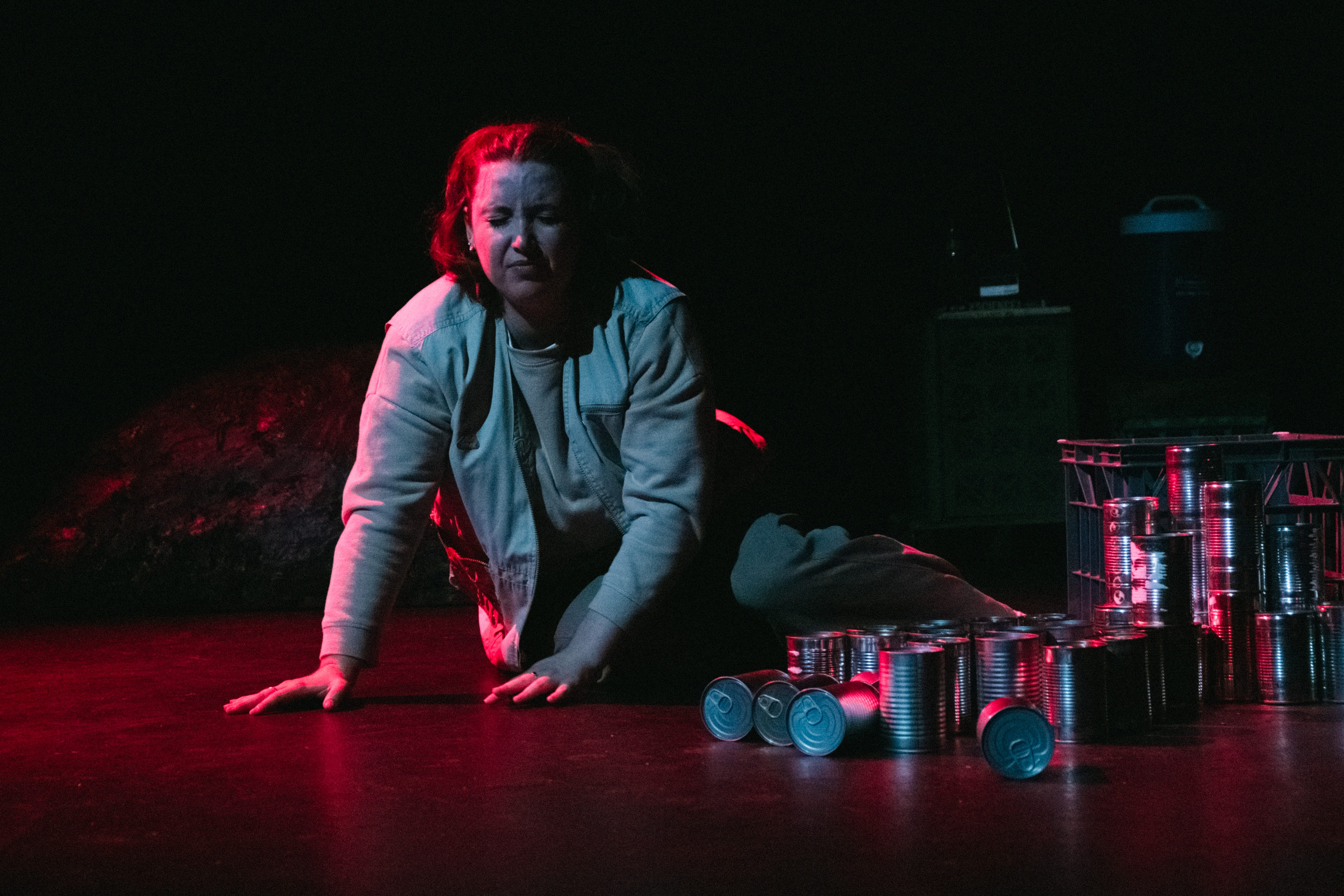
Lilah Benetti’s lighting design is simple but effective. It evokes fear when needed, like when the burrow experiences a blackout and everyone is plunged into darkness.
The decision to surtitle the show via projection onto the back wall is commendable in its aim to provide greater accessibility to audience members. But as a side effect it did also reveal when the actors accidentally swapped their words around, and highlight when they looked over their shoulders to check their upcoming lines. This made for distracting viewing at several points.
Play: How to Eat Rabbit
Writer: Jamila Main
Theatre: Pillow Fight Theatre
Director: Lilah Benetti
Starring: Jamila Main (Cam) and Nory (Alex)
Runtime: 80 minutes (no interval)
Dates and venue: La Mama Courthouse (presented at the La Mama Hope Punk Climate Festival) until 11 September 2026