

Why shouldn’t a machine be God? Deus Ex Machina expresses a clear interest in exploring questions of autonomy, agency and artificial intelligence through the story of Dora and Isaac’s quest to build a machine that helps people talk to God.
Deus Ex Machina is the first show produced by Fourth. Theatre Co, a new theatre company based in Melbourne created by Max Pickering and Esmé Stripp. It is currently showing as part of the Melbourne Fringe Festival.
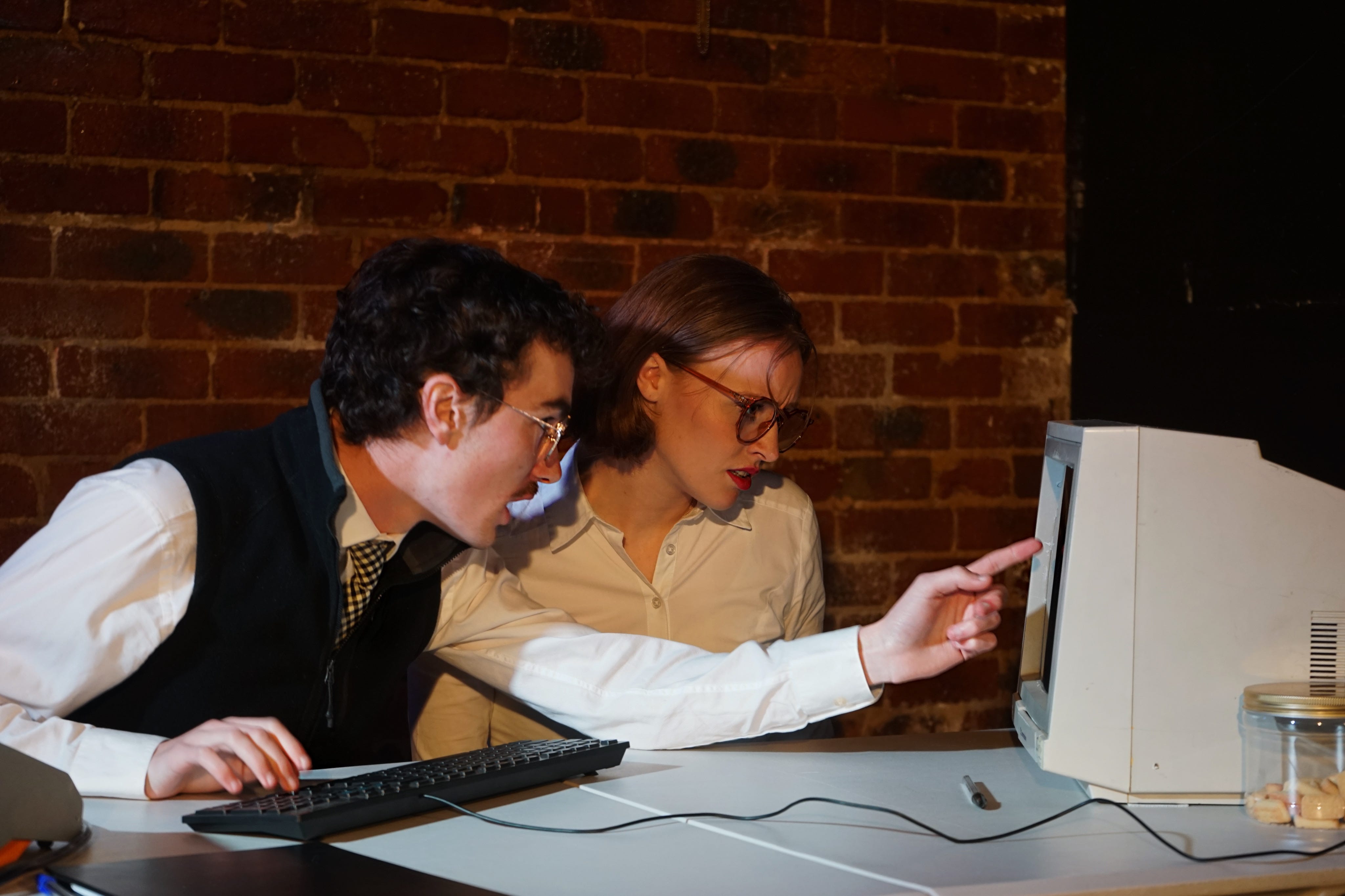
The machine is Isaac’s project and Dora, a church volunteer, has been sent to assist him. Dora’s character is clear: she is a leader at her church and wants to help people. Isaac, as the creator, feels less clear. The play does not explore his motivations for wanting to create a God-like machine or the potential ramifications of such a project. It occasionally hints at a Frankenstein-style sense of regret, but never escalates into that territory.
Max Pickering’s direction does well to flesh out the show in the small space of the Motley Bauhaus Theatrette. We get a good sense of Isaac’s workspace, even if it is occasionally diminished by the theatre’s regrettable sightlines.
Strangely, for a story set in the near future, it feels very steeped in the past. In particular, the design choices hark back to previous decades. The computer set pieces, the music and the costumes all evoke the 90s. This does encourage me to reflect on the fact that even though artificial intelligence is a hot topic right now, not a lot of the questions it poses are new. More relevant and pressing perhaps, but not new.
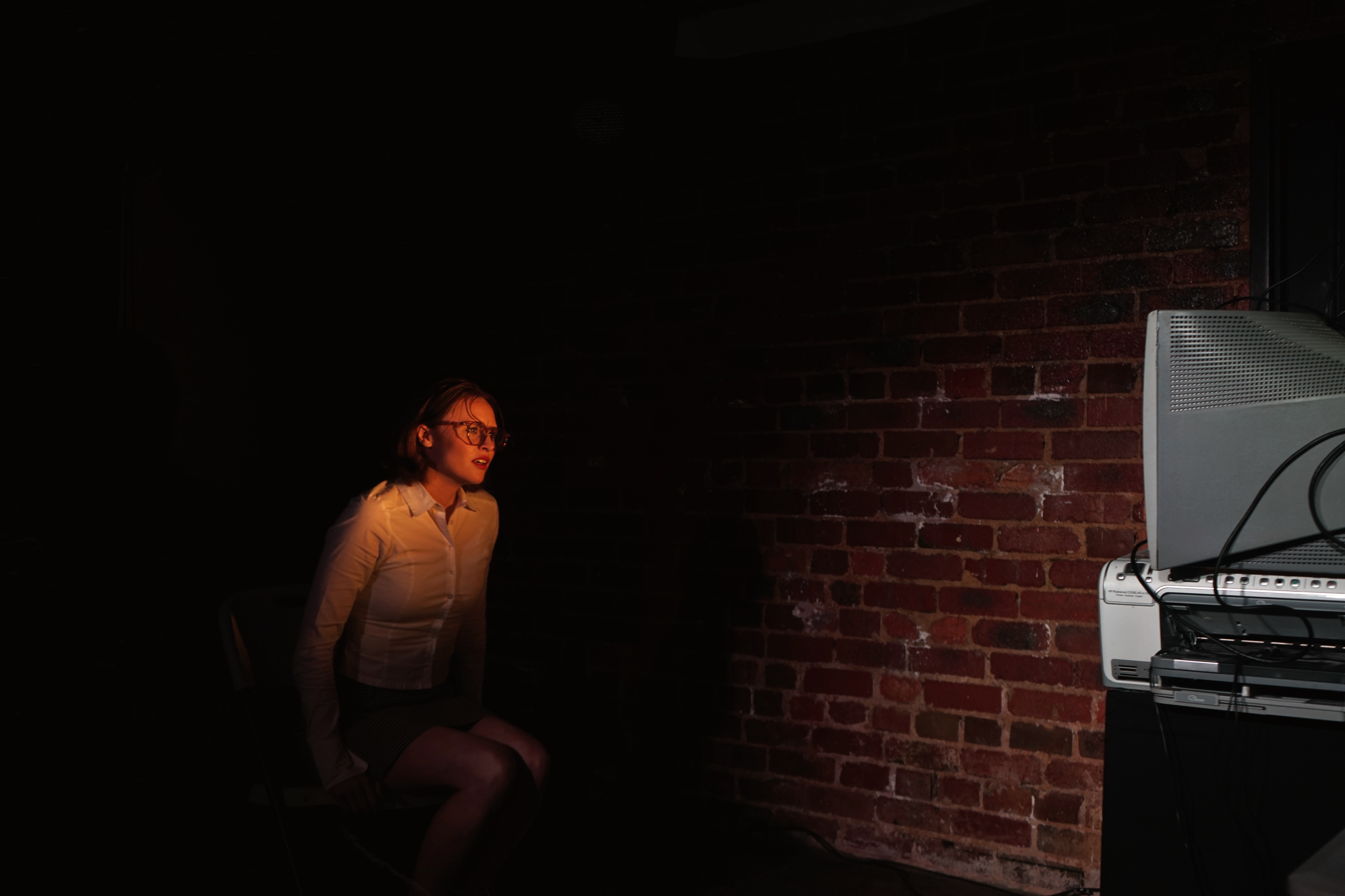
Karen Ng’s lighting design is a real strength of the show. Deus Ex Machina’s best moments are when Dora or Isaac are individually talking to the machine. The lights dim, painting the theatre black except for the character speaking to the machine. It cleverly conveys how the character feels sucked into the envelopment of the machine and loses sight of the world around them. It helps creates a real sense of trepidation and uncertainty, particularly when the machine says to its subject: ‘Let me comfort you.’
Deus Ex Machina excels most when it probes into that uncomfortable territory: what do we gain when we talk to a computer? How does it make us feel?
The costume design feels like a missed opportunity to reveal more about the characters’ distinctive personalities. Both Dora and Isaac wear simple office-like ensembles centred around a white button-up shirt. They are dressed very similarly despite the fact they didn’t feel like similar people.
Max Pickering’s sound design is strong. The show contains instrumental transitional scenes to represent the passing of time and the electronic music fits well.
Overall, Deus Ex Machina feels more like a vignette than a full story. The glimpses it offers into Dora and Isaac’s world are enticing and thought-provoking, but they feel too brief. It probes the surface of asking who do we believe and why; I left feeling like I wanted to know more.
Rating: Recommend
Play: Deus Ex Machina
Writer: Esmé Stripp
Theatre: Fourth. Theatre Co
Director: Max Pickering
Starring: Felicity Barrow (Dora) and Marcus Leder (Isaac)
Runtime: 50 minutes (no interval)
Dates and venue: Motley Bauhaus (presented at the Melbourne Fringe Festival) until 4 October 2026